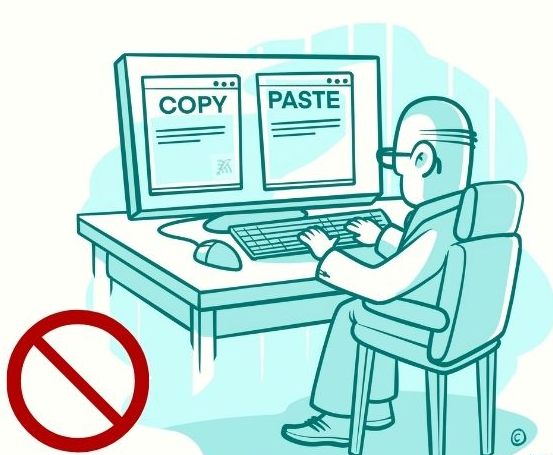
What is self-plagiarism and why do colleges care about it?
Self-plagiarism is when you submit work you have already received credit for, without disclosing that you are doing so. It matters to colleges because academic credit is meant to reflect new learning and effort.
Reusing an old essay misrepresents the work as original to that assignment, which undermines the academic process even if the writing is genuinely yours.
Most institutions cover this in their academic integrity policy, often using terms like "double submission" or "duplicate work." The fact that you wrote it yourself is not a defence if the policy prohibits reuse.
What are the actual risks of reusing an old essay?
A zero or failing grade on the assignment
The most immediate consequence is losing credit for the work entirely. Professors who discover a resubmitted essay can give you a zero, which can be enough to fail a module depending on how assessments are weighted.
Academic misconduct proceedings
Many universities escalate self-plagiarism cases to a formal review board. That means a written record, a hearing, and a finding that follows you through your academic career. Some institutions place a note on your transcript.
Turnitin and similarity detection
Turnitin and similar tools flag text that matches previously submitted work, including your own prior submissions if your institution has kept them on file. If your old essay is in their database, resubmitting it will likely trigger a similarity report, even if no one suspected anything beforehand.
Expulsion in serious cases
Repeat offences or large-scale reuse at institutions with strict integrity policies can result in suspension or expulsion. This is rare for a first offence, but the risk is real if the policy is clear and the violation is deliberate.
Does it matter how much of the essay you reuse?
Yes. Reusing a paragraph or two is treated differently from submitting an entire paper. Some professors allow you to build on previous work if you disclose it and expand significantly. The safest approach is always to ask in writing before you submit, so you have a record of the permission given.
Partial reuse without disclosure is still a risk. If a similarity report flags a significant portion of your work and you have not disclosed the overlap, you may still face misconduct proceedings even if the rest of the essay is new.
Can you ever reuse your own work legally?
In some cases, yes. If a professor explicitly permits building on prior work, if the assignment is cumulative by design, or if you are in a portfolio-based programme, reuse may be acceptable. The key word is disclosure. Telling your professor upfront and getting approval removes the deception that makes self-plagiarism a violation.
Outside of those situations, the safest option is a fresh piece of writing. If you need original essay writing help, a custom paper written from scratch removes any overlap risk entirely and gives you something built specifically for the current assignment.
Why a fresh essay is almost always the better choice
Even if you think your old essay might be allowed, the process of seeking permission, checking policies, and worrying about detection takes more effort than it is worth. A new essay written for the specific brief will score better too, because it addresses the exact question rather than fitting an old answer to a new prompt.
CollegeEssay.org has helped thousands of students by producing custom work from scratch. Every paper is written by a human writer with subject expertise, comes with a plagiarism report, and is built around your specific assignment. There is no overlap risk because there is no prior version to flag.