Dissertation Examples at Undergraduate, Master’s, and PhD Level
The standard a dissertation must meet changes significantly as you move through academic levels, and reviewing an example at your exact level is what makes this exercise useful. If you want to understand the full process behind the examples below, our guide to dissertation writing covers everything from selecting a topic to structuring your argument chapter by chapter.
Undergraduate Dissertation Example
An undergraduate dissertation typically runs between 8,000 and 15,000 words depending on institution and field. Examiners at this level look for a clear research question, a coherent methodology, and a conclusion that connects findings back to that question. You are not expected to break new ground, but you do need to demonstrate that you can conduct independent research and sustain an argument with evidence across multiple chapters.
CollegeEssay.org publishes full dissertation examples at undergraduate, master’s, and doctoral levels across multiple academic disciplines for students to use as structural references.
Master’s Dissertation Example
A master’s dissertation must demonstrate command of the existing literature in your field and the ability to design a study that goes beyond summarising what other researchers have said. The methodology chapter carries more weight at this level than it does at undergraduate. Examiners look for methodological justification: why your chosen approach fits your research question, not just a description of what you did.
PhD Dissertation Example
A PhD dissertation must demonstrate an original contribution to knowledge, typically across 60,000 to 100,000 words depending on the discipline. The literature review must map the field thoroughly enough to locate the specific gap your research fills. The discussion must connect findings back to theory rather than simply reporting results. This example walks through the structure of a completed doctorate-level dissertation and illustrates the depth of argument expected at this level.
You have now seen what the bar looks like at each level. If you know the standard your dissertation needs to reach but need support getting there, you can get expert help with your dissertation from a team that writes at the level you are targeting: undergraduate, master’s, or doctorate.
Which Dissertation Example Matches Your Field of Study?
The dissertation example that matches your field of study is the one from your own discipline. The ten sections below each reflect the methodological and structural conventions your examiner will apply. CollegeEssay.org’s dissertation writers cover all ten disciplines on this page, including nursing, law, and business, and are matched to orders by field and academic level.
Education Dissertation Example
Education dissertations frequently combine qualitative research with policy analysis or practitioner reflection. A strong education dissertation takes a clearly defined population (a school, a cohort, a specific intervention) and argues something precise about it rather than making sweeping claims about education as a whole. The example below demonstrates how to frame a focused research question and build an argument around primary observation data.
Psychology Dissertation Example
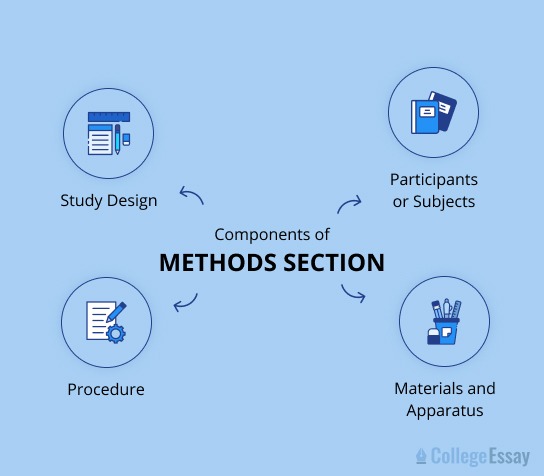
Psychology dissertations at undergraduate and master’s level are almost always empirical, meaning you design a study, collect data, analyse it, and interpret the results against existing theory. The methods section is the most scrutinised part of a psychology dissertation. Reviewers look for appropriate sample size justification, valid and reliable instruments, and transparent analysis, not just a description of the procedure.
Nursing Dissertation Example
A nursing dissertation must engage with current clinical guidelines and peer-reviewed research, and the discussion must connect findings to practical implications for care delivery. The literature review should demonstrate awareness of both the academic evidence base and the professional standards that govern practice in your area. This example demonstrates how to structure a nursing dissertation that meets both the academic and professional expectations of the field.
Business and Finance Dissertation Example
Business and finance dissertations use quantitative market data analysis, qualitative case studies of organisations, or mixed-method research into consumer behaviour, sometimes within the same submission. What they share is a requirement to engage with real-world data and produce findings that have practical relevance beyond the academic context. The methodological range in this discipline is wider than in most others, which means the example below covers more structural ground than a single-method dissertation typically would.
English Literature Dissertation Example
An English literature dissertation is built around close textual analysis, and the argument must be grounded in specific passages rather than general impressions of a text. The same skills that produce a strong literary analysis essay form the foundation of a literature dissertation, though scaled up significantly in scope and required to engage with a body of critical scholarship rather than a single text. Reaching that level of argument requires a clear original claim, a traceable close reading method, and command of the critical debates your texts sit within. This example illustrates how to move from textual evidence to a defensible scholarly argument.
Law Dissertation Example
Law dissertations require precise engagement with case law, statute, and academic commentary. The argument must be legally coherent, not merely persuasive in general terms, and the literature review must demonstrate awareness of the relevant doctrinal debates in your area of law. This example shows how to structure a law dissertation that meets the analytical standards expected by legal examiners.
Criminology Dissertation Example
Criminology dissertations draw on both sociological theory and empirical data, and a strong one identifies a specific gap in the literature (a population not studied, a theory not tested, a policy not evaluated) and fills it with primary or secondary research. The example below demonstrates the structure and depth expected at undergraduate and master’s level in this discipline.
Social Sciences Dissertation Example
Social sciences dissertations vary by subfield. Sociology, anthropology, political science, and development studies each carry their own methodological conventions. What they share is a requirement to situate individual findings within broader social theory. This example from cultural studies shows how to connect empirical observations to theoretical frameworks in a way that satisfies examiner expectations.
Media and Journalism Dissertation Example
Media and journalism dissertations often combine discourse analysis with industry or audience research. This example is available as a direct PDF download, the format most visitors to this page are looking for when researching how a completed dissertation is structured at postgraduate level.
You now have a detailed picture of what finished dissertations look like at every level and across your field. The next step is producing your own, which involves sustained research, a defensible argument, and months of drafting. If that scope is more manageable with professional backing, our custom dissertation writing services pair you with a subject-specialist writer who has delivered at the level you are targeting.
Award-Winning Dissertations in STEM, History, and Other Disciplines
The award-winning dissertations below represent verified first-class work in STEM, history, linguistics, and computer science, selected by discipline-expert panels at institutions including Stanford, Caltech, and the University of Pennsylvania.
Applied Microbiology Dissertation
At doctoral level in the natural sciences, this dissertation demonstrates what original contribution looks like in applied biology research. The work developed new diagnostic tools for parasitic infections affecting hundreds of millions of people, showing how a focused technical problem can sustain a full doctoral argument.
Linguistics Dissertation
This dissertation takes a tightly bounded empirical question about how listeners process speech fluency and argues it through multiple linked experiments rather than a single study. The multi-experiment structure is common in linguistics and cognitive science dissertations and worth examining closely if your field expects it.
Nuclear Physics Dissertation
This doctoral dissertation argues through experimental precision and measurement innovation rather than broad theoretical scope. The research provides one of the highest-precision measurements of neutron beta decay parameters, showing how a single well-executed experiment can constitute an original contribution to knowledge in physics.
Quantum Physics Dissertation
This master’s dissertation demonstrates award-level work in experimental quantum physics through a focused study of simultaneous measurements of complementary quantum properties. It is a useful structural reference if your programme is in the physical sciences and your argument depends on experimental design rather than computational modelling.
Chemical Engineering Dissertation
This dissertation shows how a STEM contribution can be primarily theoretical: the research developed new mechanistic models for a specific class of fluid dynamics problems rather than conducting broad empirical surveys. Many chemical engineering dissertations argue this way, and the structure is worth studying if yours does too.
Computer Science Algorithms Dissertation
This doctoral dissertation contributes new algorithmic techniques for approximation problems in combinatorial optimisation, including a landmark result on the Travelling Salesman Problem. It shows how a dissertation in theoretical computer science builds its argument through the development and analysis of new algorithms rather than through empirical data collection.
Marketing Dissertation
This doctoral dissertation examines the psychological mechanisms that determine whether consumers share information socially. The contribution is a new theoretical framework rather than a field experiment, demonstrating how marketing dissertations can argue through model-building and systematic empirical validation rather than a single primary study.
Computer Vision Dissertation
This doctoral dissertation demonstrates how dissertations in computer science and engineering can argue through the development and testing of novel systems. The research introduced new structure-from-motion techniques that enable 3D scene reconstruction from unstructured internet photo collections, a contribution validated by system performance rather than a written theoretical argument.
Computer Science Senior Thesis
This undergraduate thesis demonstrates that a well-implemented and evaluated system can satisfy the requirements for a top-graded dissertation in computer science. The research built a browser-based peer-to-peer content delivery system as the primary contribution, arguing through architecture, implementation, and performance testing rather than through literature analysis.
World History Honors Thesis
This undergraduate honors thesis demonstrates how humanities work at this level produces a specific, evidence-grounded argument within a narrow scope. The dissertation argues a precise claim about the influence of “Noble Savage” imagery on British and French antislavery thought through close reading of primary sources, showing how a focused historical case study carries real scholarly weight within an undergraduate word count.
History Senior Thesis
This undergraduate senior thesis shows how a focused archival case study can argue something substantial within a limited word count. The research examines UNRRA’s role in the genesis of global humanitarian relief through the case of India, demonstrating how a tightly scoped historical argument can make a genuine contribution to a field’s understanding of a specific event.
How Do You Use Dissertation Examples to Strengthen Your Own Writing?
Use dissertation examples to study structure rather than content. Map the chapter architecture, argument pattern, and referencing density your examiner expects, not the topic or findings.
- Read for structure, not content. What matters is how the dissertation is constructed: how the introduction frames the research problem, how the literature review narrows from broad context to a specific gap, how the methodology section justifies its choices rather than just describing them, and how the discussion connects findings back to the theory introduced at the start.
- Map the architectural pattern. Use the examples at your level to count the chapters and sections. Note the approximate word allocation between them. Look at how the argument introduced in the first chapter is returned to in the final one. Look at the referencing density in the literature review: how many sources appear per paragraph and how they are integrated rather than simply listed. These are the architectural decisions that separate a first-class dissertation from a passing one, and they are invisible if you read the examples only for their content.
- Use award-winning entries as quality benchmarks. The award-winning dissertations above are particularly useful for this exercise because the quality has already been verified by expert panels. Read them looking for the choices, not just the conclusions.
You have reviewed real dissertation examples by level and by field and now have a concrete picture of the structure, depth, and argumentation your program expects. Writing a dissertation that meets that standard takes months of sustained research, a methodology your examiner will accept, and chapters that hold together as a coherent argument from start to finish. CollegeEssay.org’s dissertation writing services connect you with a writer who specialises in your discipline and academic level, so the gap between the examples you have studied here and the dissertation you need to submit closes faster than working through it alone.
Frequently Asked Questions



-16768.png)