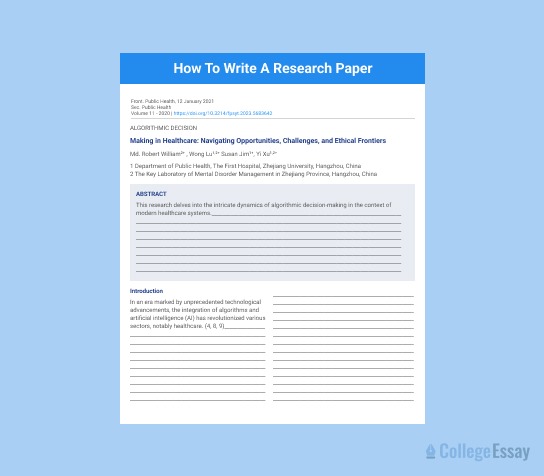
Anthropology Essay Example
The strongest anthropology essays pick one subfield and one specific question because a paper on food rituals in one community will always outperform a broad overview of human societies. This general anthropology essay demonstrates how to build an argument around a central anthropological concept without reducing it to a summary of source material. The essay takes a clear position on how cultural practices function within larger social systems and supports it with specific ethnographic evidence rather than broad claims.
Anthropology College Essay Example
A college-level anthropology essay is typically 1,000 to 1,500 words, requires fewer sources than a graduate paper, and must establish and resolve a focused argument within a tighter scope. This example shows how to do that without oversimplifying the anthropological thinking the assignment requires.
Cultural Anthropology Essay Example
Cultural anthropology essays analyse how shared beliefs, rituals, norms, and symbols organise group life. The central challenge is avoiding the trap of treating culture as static or monolithic. This example demonstrates how to account for internal variation within a cultural group while still making a coherent argument about observable patterns of behaviour.
If your assignment sits outside cultural anthropology or covers a subfield not yet represented below, our professional essay writing services for your subject match you with a writer who works in anthropology and adjacent social science disciplines, not a generalist.
Anthropology Research Paper Example
An anthropology research paper requires more sustained engagement with primary and secondary literature than a standard undergraduate essay. The argument must be positioned within existing scholarship, and the methodology, whether ethnographic, comparative, or archival, must be made explicit. This example shows how those elements work together in a paper that reads as a piece of original inquiry rather than a literature review.
What I Learned in Anthropology: Essay Example
Reflective anthropology essays ask you to connect course content to your own observations or prior assumptions about culture. The risk with this format is that the essay becomes personal anecdote without analytical grounding. This example shows how to anchor a reflective argument in course concepts without losing the first-person perspective the assignment specifically asks for.
Social and Cultural Anthropology Extended Essay Example
Extended essays in social and cultural anthropology typically run 3,000 to 5,000 words and require original engagement with a sustained research question. The structure differs from a standard essay: sections need to build cumulatively rather than stand as independent units, and the literature review must do real argumentative work rather than simply demonstrate familiarity with sources.
How to Use These Anthropology Essay Examples
Read the annotation for the example closest to your assignment a second time before you start drafting. Each annotation flags the same moves your examiner is looking for:
- Thesis placement: where it sits and how it is phrased as a claim, not a topic
- Evidence handling: how sources are interpreted rather than quoted and dropped
- Argument closure: how the conclusion extends rather than restates
If the format itself is still unclear, the section below breaks each part down in detail.
How to Format an Anthropology Essay
Anthropology essays follow the same three-part structure as most academic writing, but each section carries specific expectations in this discipline. If your assignment is a reflective essay rather than an analytical one, check that guide first, as the structural expectations differ. The examples below demonstrate what the analytical format looks like in practice across introduction, body, and conclusion.
An anthropology essay introduction must establish the specific cultural or social question the essay addresses, position it within the relevant theoretical or ethnographic context, and state a clear, arguable thesis.
A common mistake is spending the entire introduction defining anthropology or the subfield. The reader knows the field. Use the space to set up your specific argument.
The thesis is not a description of what the essay covers; it is a claim about how or why something works within a cultural or social system. “This essay will examine gender roles in X society” is a topic announcement. “Gender roles in X society function primarily to regulate access to land inheritance rather than to enforce biological difference” is a thesis.
You have seen what strong examples look like and how a well-constructed introduction sets up the argument. The next step is writing your own essay to the standard your assignment requires. CollegeEssay.org’s subject-specific services pair you with a writer who works in anthropology and adjacent social sciences, so the essay reflects the discipline’s argumentative standards from the first paragraph.
Each body paragraph opens with a claim, supports it with ethnographic data or theoretical frameworks, interprets the evidence, and connects the point back to the essay’s central argument.
- Open with a claim: not a description of what the paragraph covers
- Support the claim: with ethnographic data, comparative evidence, or theoretical frameworks
- Interpret the evidence: explain what it reveals; a quote dropped without analysis is not evidence
- Connect back: link the paragraph’s point to the essay’s central argument
If a paragraph can stand alone without the rest of the essay, it is not doing enough argumentative work.
A strong anthropology essay conclusion extends the argument rather than restating it, identifying a broader theoretical implication or a direction for future inquiry.
- Summarise the main points in one or two sentences
- Identify the broader implication; theoretical, methodological, or a direction for future inquiry
- End with a sentence that gives the reader a reason to care about the argument
Do not introduce new evidence in the conclusion. If something is important enough to appear there, it should have been in the body.
| Institution type | Standard style |
|---|---|
| Most US universities | AAA format (American Anthropological Association) |
| Some US courses | Chicago author-date |
| UK institutions | Harvard referencing |
Check your assignment brief before you begin; both AAA and Chicago are author-year systems but handle ethnographic sources differently. When in doubt, ask your instructor before submitting.
What Makes a Strong Anthropology Essay Argument?
A strong anthropology essay argument is contestable, treats every source as something to be interpreted rather than cited, and positions itself within an existing debate in the discipline.
- Contestability: the claim must be arguable, not a description of what a practice looks like
- Interpreted evidence: sources are used to support a point, not cited and left to speak for themselves
- Field positioning: the argument acknowledges what it adds to an existing debate in the discipline
The distinction between description and analysis is what most separates passing from strong work at every level.
You have annotated examples across cultural, social, and research anthropology, a format guide with section-specific PDFs, and a topic list to draw from. If the writing itself is the part that remains unresolved, browse our essay writing services by subject to find a discipline-matched writer who can take the assignment from here.
Frequently Asked Questions